kbstrip
 The warm reef tide in my palms as I wade out towards the big question — “What Are The Fish In The Great Barrier Reef?” – I’m constantly reminded that the reef feels like its very own underwater city.
Fish weave through little coral streets, rays dance along sandy plazas, and reef sharks hang out on the outskirts like some laid-back security guys on the dole. After years of showing visitors around Tropical North Queensland and the outer reef, I’ve picked up that once you know who’s who in this little community, it all starts to make a lot more sense – from the tiny coral polyps right up to the big pelagic visitors like manta rays and the odd whale shark.
This guide just cuts through the clutter and gives you the fish species you actually see, the behaviours that help you read the reef like a local, and where beginners can just take the plunge without feeling like a stunned mullet for the first time in the water.
How Fish Influence The Reef’s Daily Rhythm
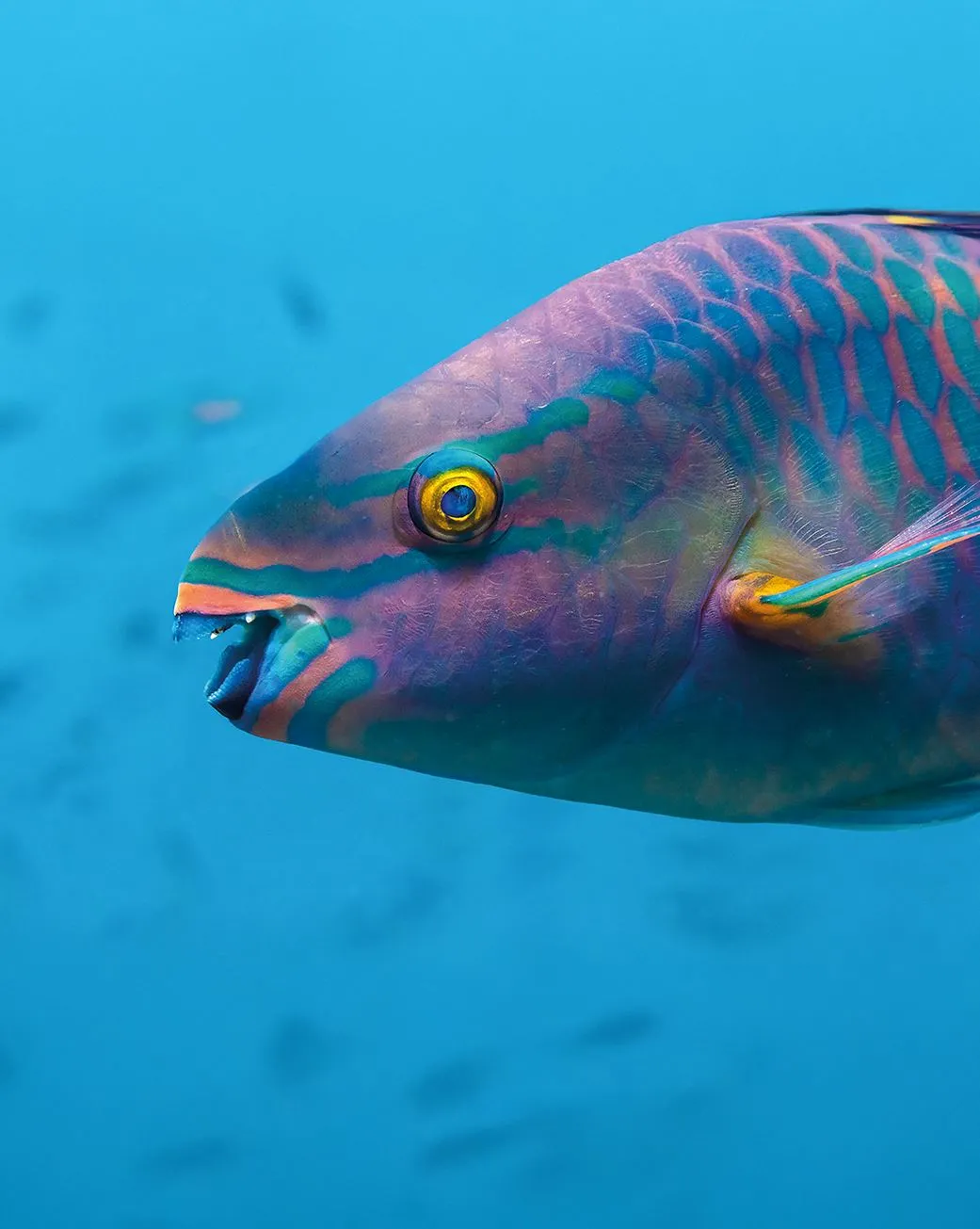
The Great Barrier Reef is a coral reef system built on balance, and fish are the unsung heroes that keep it ticking. Herbivorous fish like surgeonfish and parrotfish keep the algae off the coral, while the predators keep the whole food chain in check. Even the tiny little colourful species like chromis, wrasses, and anemonefish all play a part in the whole marine ecosystem.
If you stick your ear in the water, you can hear the reef humming along – tiny snapping shrimp, parrotfish chomping on the coral, and what sounds like fish communication going on with all these popping and clicking noises. These sounds are how researchers at the Australian Institute of Marine Science track how the reef is doing.
Once you start to get a handle on what you’re looking at, you’ll start to see all sorts of patterns everywhere:
- Those little chromis just floating around above the coral heads
- Anemonefish fiercely defending their turf
- Surgeonfish just cruising the reef like they’re the first cleaners of the day
- Puffers just cruising along as if they own the place
It doesn’t take a huge amount of knowledge to start snorkelling smarter – and appreciating how the reef just keeps on going 24/7.
The Top Species Travellers Usually Spot Out There
You could fill a whole library with descriptions of reef fish species – scientists reckon the Great Barrier Reef is home to over 1,600 different species. For travellers, these are the ones that you’re most likely to run into on the day trip.
Reef Fish You’ll Recognise (Or Want To Look For)
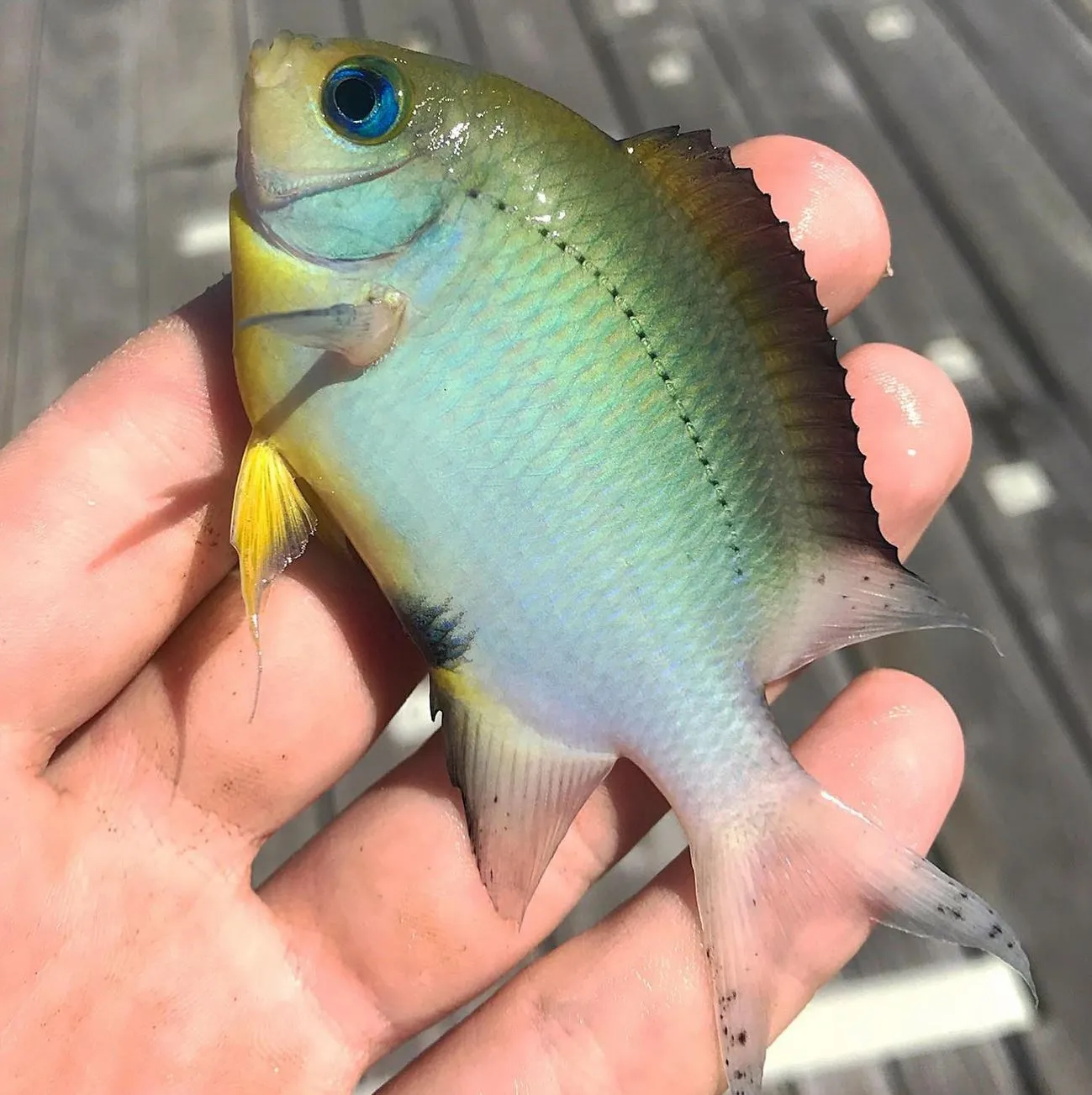
Below is a table of common species, grouped for travellers who want the quick-and-dirty guide before jumping in.
| Fish Name | Notes for Travellers |
|---|---|
| Abalistes stellatus | A triggerfish with bold patterns — often seen cruising sandy edges. |
| Five-banded sergeant-major | Small striped schooling fish — follows snorkellers expecting food. |
| Spiny chromis | Peaceful schooling fish hovering above coral bommies. |
| Whitefin surgeonfish | Key algae grazers — often in big schools. |
| Roundspot surgeonfish | Seen around coral drop-offs. |
| Ringtail surgeonfish | Common on shallow reef flats. |
| Eyestripe surgeonfish | Fast-moving reef grazers. |
| Japanese surgeonfish | Found in deeper, outer reef areas. |
| Lined surgeonfish | Bright blue, yellow, and black stripes. |
| Chocolate surgeonfish | Brown body, calm temperament. |
| Golden rim surgeonfish | Strong yellow ring — easy to identify. |
| Orange clownfish | The classic orange-and-white stripes. |
| Clown anemonefish (Nemo) | Extremely territorial — don’t touch the anemone. |
| Red-and-black anemonefish | Shy but striking. |
| Blue-striped orange tamarin | A small wrasse with electric colours. |
| Black-banded wrasse | Zips between coral heads chasing small prey. |
| Shaggy angler | Masters of camouflage — looks like algae until it moves. |
| Painted frogfish | Another camo specialist — often missed by snorkellers. |
| Apogon capricornis | A cardinalfish often tucked into coral crevices. |
| Threespot angelfish | One of the reef’s more colourful “big personalities.” |
| Stellate puffer | Large, slow, and full of attitude. |
| Blackspotted puffer | Inflates when threatened (so give it space). |
| Map puffer | Beautiful patterns, very photogenic. |
| Coral shrimpfish | Swim vertically like little walking sticks. |
| Spotted eagle ray | Graceful and often seen out on the sand flats. |
| Alopias pelagicus (Pelagic thresher shark) | Rare near day-trip reefs, but iconic in deeper waters. |
Rare and Special Sightings on the Great Barrier Reef
- Manta Rays – They occasionally show up in the Southern GBR and at Lady Elliot Island
- Whale Sharks – You can sometimes see them cruising near Osprey Reef
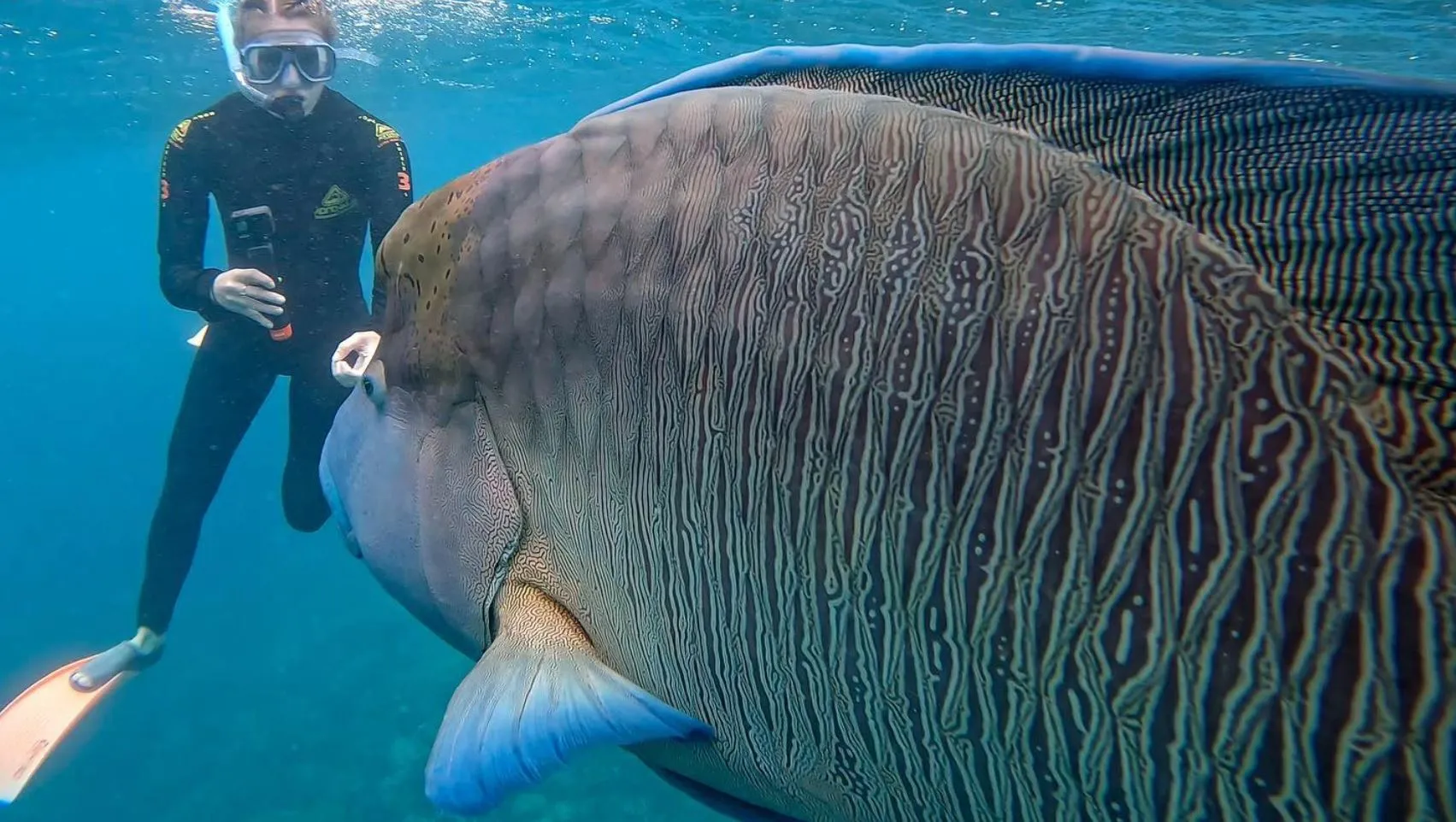
- Maori Wrasse – The Big & Curious Ones – They’re definitely a highlight of the Cod Hole classics
- Giant Clams – Even though they’re not a fish, they play a huge role in keeping the reef fish habitat healthy
- Dwarf Minke Whales – These playful creatures pop up in mid-water and often interact with other species around them
- Ambush Hunters – like Frogfish and Lionfish – they’re a great example of how smart and sneaky the reef can be
- Pelagic Fish – in big schools – they tend to show up around Lizard Island during the dry season
All of these special creatures help make the reef what it is – and that’s why so many people keep coming back.
What To Look For Using Simple Behaviour Tips
Even just a short snorkel over the reef will become a lot more interesting if you know what to keep an eye out for
1. Cleaning Stations – The Fish Dentists
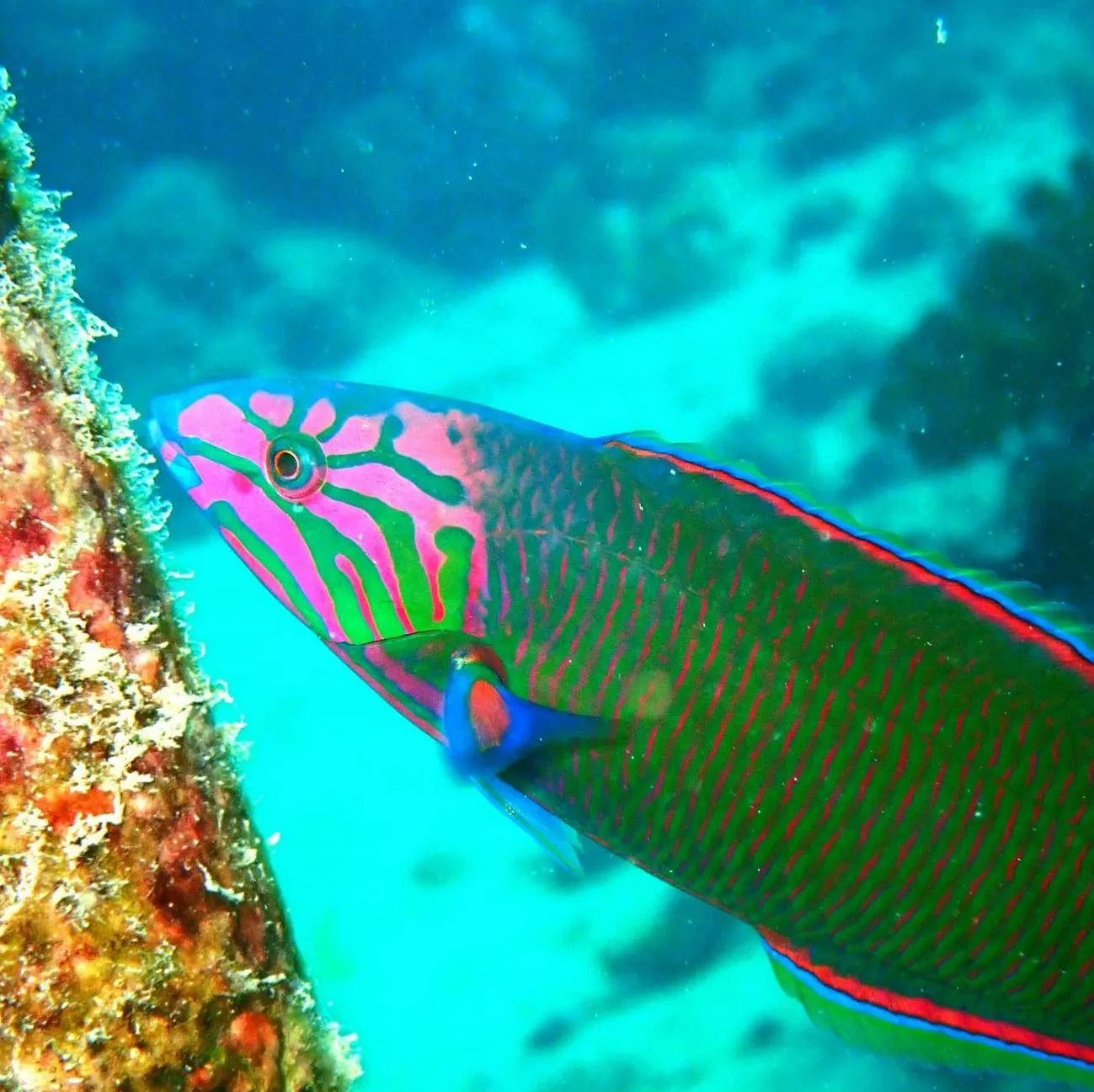
Look for:
- Small wrasses work on a customer like a dentist
- Larger fish are hovering still, waiting for a turn
- Fish going backwards and forwards – that’s the “cleaning stations” at work
On the reef, it’s not uncommon to see bigger fish just waiting for their turn to get cleaned while a smaller fish carefully removes parasites.
2. When Baitfish Change Direction – It’s a Warning Sign
When all the fish in a school suddenly dart off in a different direction, it’s a sign that something bigger is lurking in the area – might be a trevally, a barracuda or a reef shark passing by
3. The Great Anemone Wars
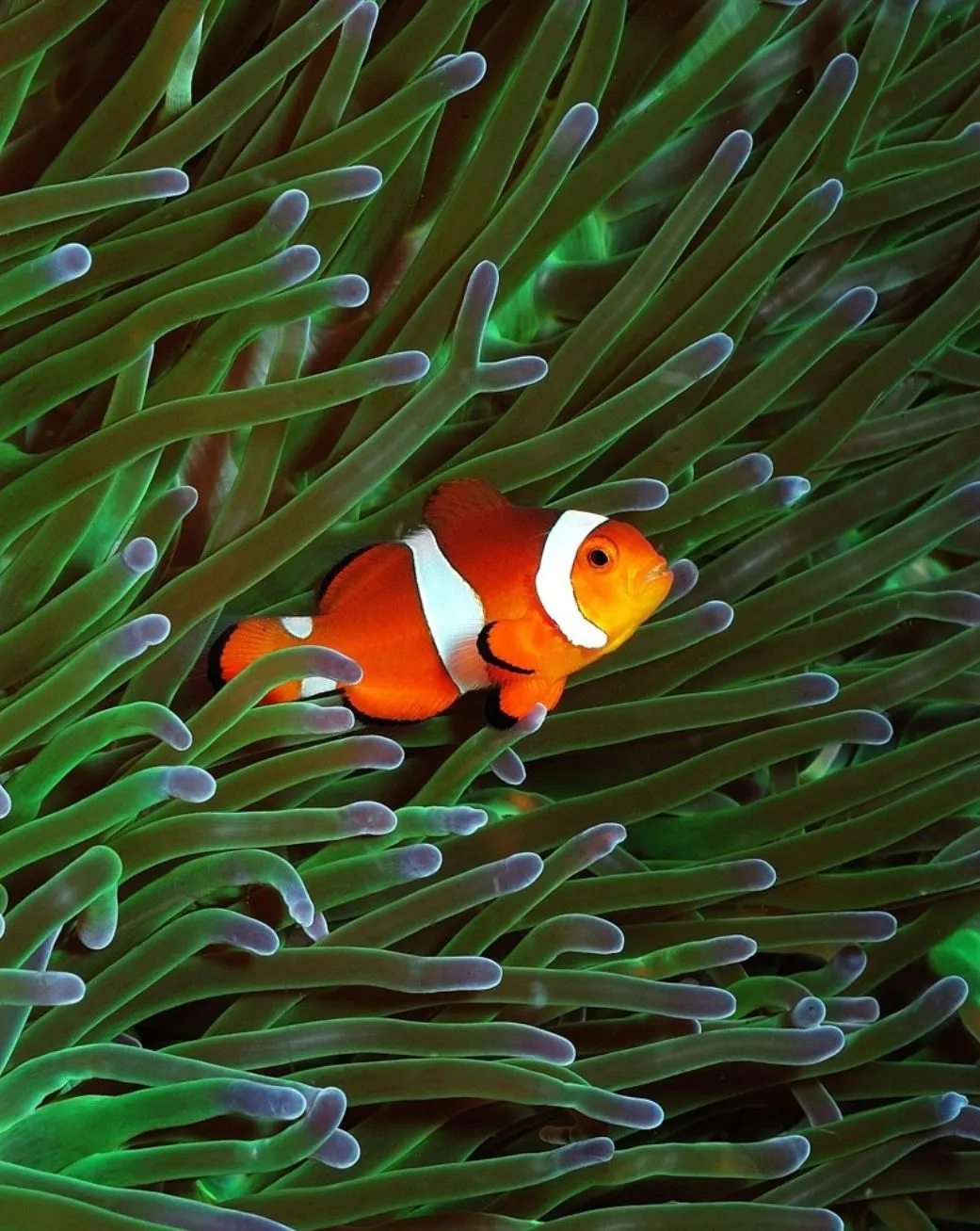
Anemone Fish – like the Nemo we all know – are super territorial. They fight hard to protect their home – even from us, snorkellers. I’ve had a few close calls with anemone fish defending their patch – a nipped finger when I got a bit too close with a GoPro is a good lesson.
4. Triggerfish – Don’t Swim Above – Ever
Titan triggerfish can get pretty protective of their nests. Rule of thumb: never, ever swim above a triggerfish during breeding season. They will come up to meet you – and you might get a nasty nip in return.
Great Spots To See Fish From Dry Land
You don’t need a scuba diving certification to see the reef’s extraordinary fish life. Some of the best fish-watching spots are actually in shallow water.
Top Spots That Snorkellers Will Love
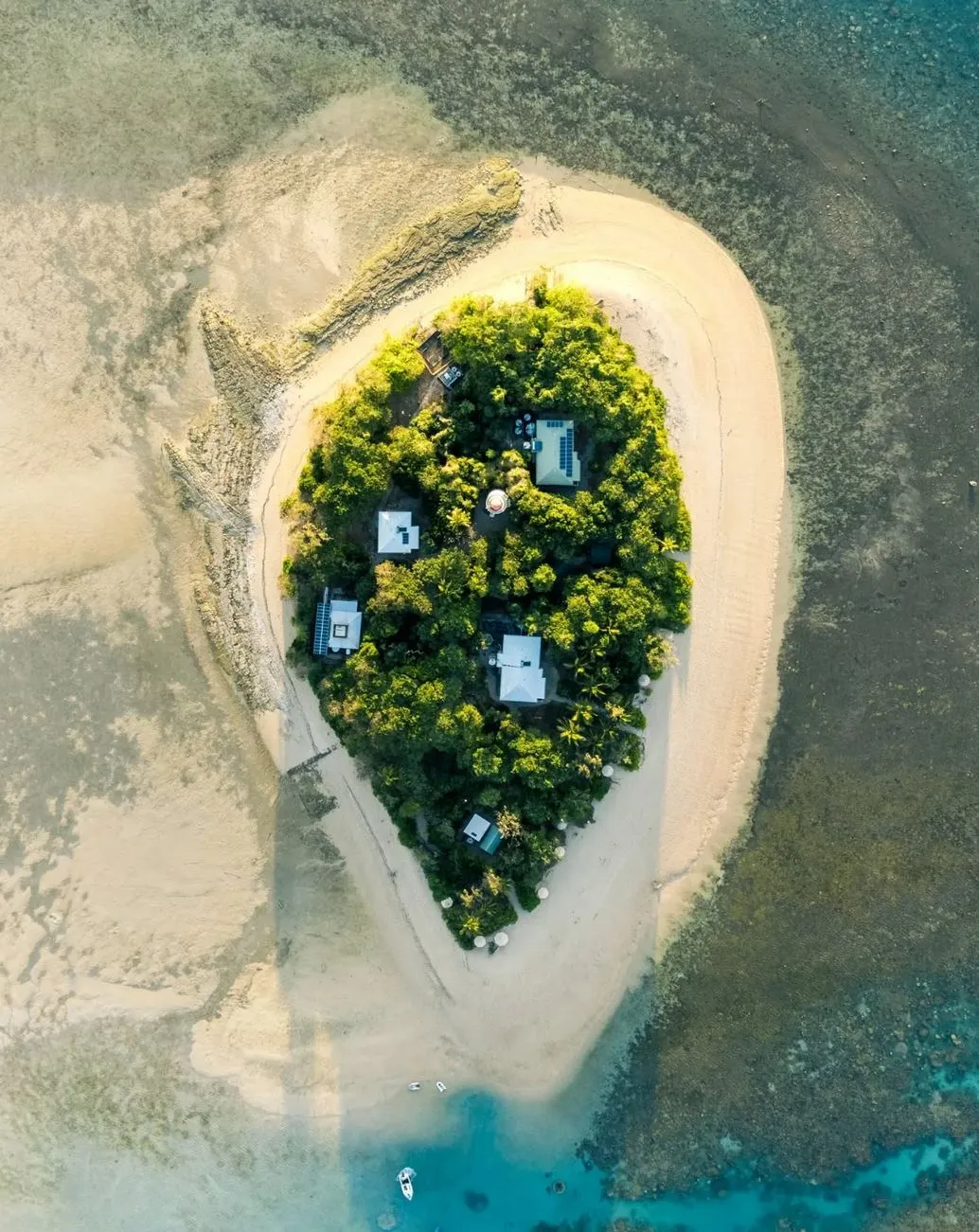
- Low Isles – Perfect For Families Near Port Douglas – Just a short boat trip to a calm, quiet lagoon perfect for a family day out
- Michaelmas Cay – A giant sandy cay covered in fish, it’s like an aquarium above and below the water
- Moore Reef – A Mix of Everything – Coral reefs, drop-offs, fish everywhere – even beginners will have a blast
- Lady Musgrave Island – The lagoon is full of all sorts of fish life – rays, turtles, reef fish – you name it
- Green Island – A Great Spot For Beginners – Beginner-friendly but can get a bit busy at times
- Fitzroy Island (Nudey Beach) – This spot’s got coral right off the sand, so you can just swim off and explore
If you don’t fancy getting in the water:
- Semi-Submersible Boats – A great way to see the reef without getting wet
- Glass-Bottom Boat Tours – You get to see the fish without having to dive
- Underwater Observatories – Some reef pontoons have an underwater observatory that lets you watch the fish below without getting wet
Once you learn the patterns of the reef — the grazers, the hunters, the shy ones, the bold ones — every snorkel feels richer. Great Barrier Reef Tours often hear travellers say the same thing: “I thought I knew what the reef was… until I actually saw how it works.”
How Seasons And Weather Change Fish Activity
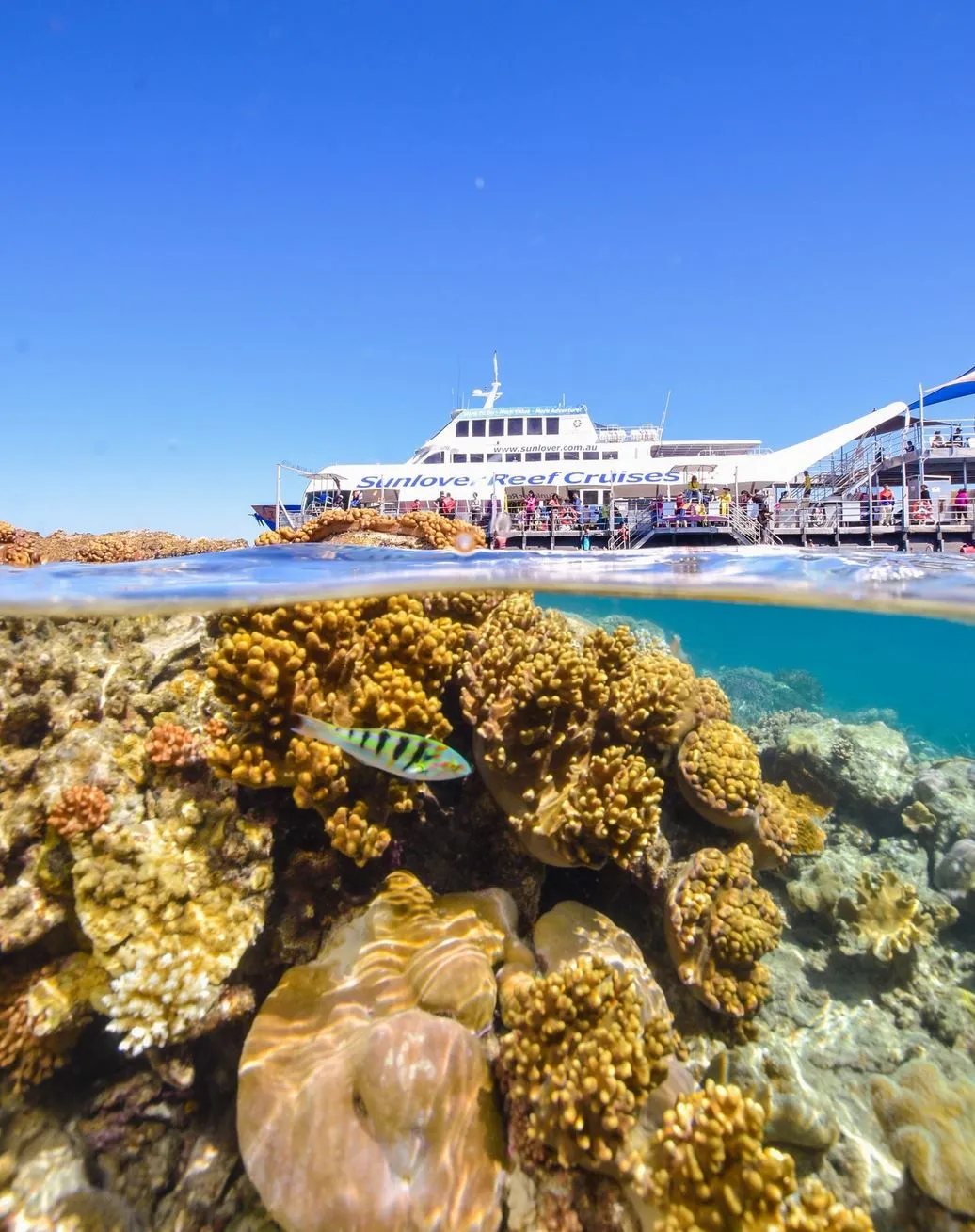
Just as travellers plan around wet and dry seasons, fish too adjust to seasonal rhythms.
Summer (Dec–March)
- Warm water = high fish activity
- Coral spawning draws huge feeding events
- Visibility can drop with rain and run-off
Dry Season (June–Sept)
- Clear water
- Cooler temps bring more pelagic fish
- Best time for shark and ray sightings
Cyclone Season (Nov–April)
Cyclone Season (Nov–April)
Always listen to operators — rough seas = cancelled trips (and better safety for all).
Wind, tide and light all change what you’ll see.
Morning snorkels often bring calmer seas and more active fish.
Safety Tips For Snorkelling Around Fish
This is where common sense meets reef etiquette.
Do:
- Give space to larger fish
- Don’t touch coral (or anything alive)
- Keep your fins high to avoid kicking the reef
- Be aware of currents and boat lines
- Watch out for triggerfish in breeding season
Don’t:
- Chase rays or turtles
- Corner or crowd any species
- Feed fish (illegal in many reef zones)
- Dive straight down onto the territorial fish
- Snorkel if conditions feel rough or beyond your comfort level
Remember: most reef fish want nothing to do with you.
FAQ
What’s the easiest fish to spot on the reef?
Chromis, sergeant-majors and wrasses will be the first to greet you — they’re everywhere.
Are reef sharks dangerous?
White-tipped reef sharks and their cousins are shy and used to snorkellers. Give them space and they’ll cruise right past.
Where can I see Maori Wrasse?
Maori Wrasse?
Cod Hole and Ribbon Reef are hot spots, but you’ll find them around many outer reef sites.
Do fish behave differently during coral bleaching?
Yes, some species relocate, and herbivores often move into stressed coral zones. It’s one reason water quality and climate stability matter.
What’s the best place for manta rays and large reef fish?
What’s the best place for manta rays and large reef fish?
Lady Elliot Island, Osprey Reef, and Ribbon Reef regularly deliver big marine life — including manta rays and the odd whale shark.